People book moving day weeks, or even months, in advance, and the forecast rarely cooperates. A family schedules a truck for a Saturday, watches the radar light up on Thursday, and wonders whether the crew will show, whether the sofa will arrive soaked, and who will pay for the extra hours. These are fair questions, and most people only think to ask them once the clouds are already building. A well-run moving and storage service plans for weather the way a roofer plans for rain: with materials, sequencing, and a clear conversation about cost before anyone picks up a box.
Weather matters more here than most people expect. Bryan, Texas, and surrounding communities like Caldwell get around 40 inches of rain each year, with May and October typically the wettest stretches. Worse, the busiest moving window in the Brazos Valley collides with the roughest conditions: Texas A&M leases turn over from late July into the first of August, residence halls fill in the last week of August, and July and August highs sit in the mid-90s with a heat index pushing well past 105. Choosing movers that can handle it all is the difference between a damp inconvenience and a damaged household.
This article covers what weather genuinely stops a move, how professional crews protect floors and furniture when conditions turn, how rain affects the clock and the invoice, what Texas liability rules really mean for water damage, and when storage is the smarter move until the sky clears.
What Weather Actually Stops a Move
Rain, Wind, and the 30-30 Rule
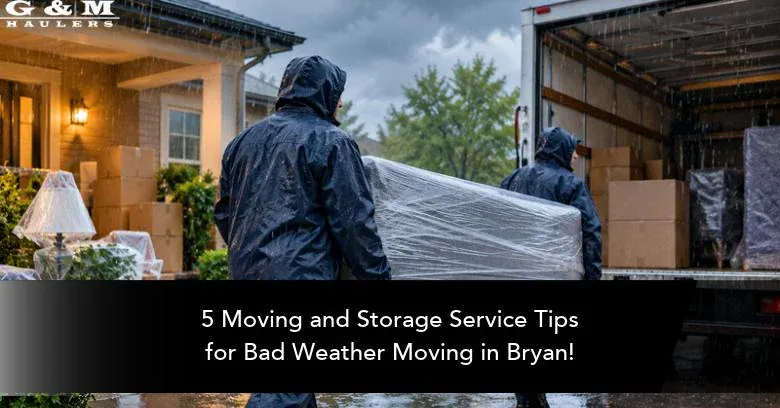
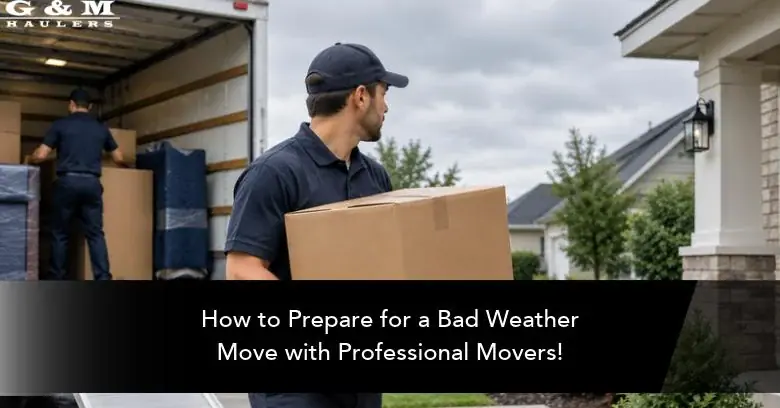
In the Bryan, Texas area, rain alone rarely cancels a move. Crews work through it constantly, using poly sheeting, mattress bags, and a tighter loading rhythm. Lightning is the one true stop-work trigger. Experienced teams use the 30-30 rule: if thunder follows a flash within 30 seconds, work pauses for 30 minutes from the last rumble. That pause is non-negotiable, because ramps, metal dollies, and aluminum truck walls are no place to be during a storm.
Wind is the underrated hazard. Once gusts climb past roughly 30 mph, mattresses, headboards, tabletops, and loose sofa cushions behave like sails. An experienced moving and storage service loads those pieces first before the wind picks up, or holds them until it settles. Households planning a relocation out toward Caldwell, Texas, should factor in open country between towns, where gusts hit harder.
Ice, Flooding, and Extreme Heat
Hard freezes are rare in the Brazos Valley, but February 2021 proved they happen. The danger is not usually the highway. It is the ramp, the metal stair tread, and the slick porch. Flash flooding is the bigger seasonal risk: low spots along Carter Creek and the Brazos bottoms can close while Bryan proper stays dry, and routes toward Navasota, Hearne, and Brenham can be cut off entirely. A crew that knows the back roads around Caldwell, Texas, can reroute instead of sitting in standing water with a loaded truck.
Heat deserves equal respect. In midsummer, crews need water breaks every 20 to 30 minutes, and that is a safety requirement, not a slowdown. Good moving and storage services build those breaks into the schedule.
Protecting the Home and the Load
Floor, Stair, and Doorway Protection
Wet boots plus hardwood is how floors get ruined. Professional protection is not a tarp by the door. It is a system consisting of:
- Masonite or Ram Board laid over hardwood and tile along the full carry path
- Neoprene runners on carpet, taped at the seams so they do not slide
- Corrugated panels on stair treads, where wet soles do the most damage
- Door jamb protectors on every doorway the crew passes through more than twice
- A staging area under cover, usually a garage or a covered porch, so items are wrapped before they go outside
Older homes near downtown Bryan, Texas, add complications. Pier-and-beam porches flex, doorways are narrow, and lawns soften after a few days of rain. A loaded truck will rut a wet yard, so the right answer is usually a longer carry from the street. A moving and storage service that has worked these neighborhoods will say so before the first box is loaded.
Boxes, Plastic, and What Should Never Be Shrink Wrapped
Wet cardboard loses most of its stacking strength. A soaked dish pack doesn't fail in the truck; it fails on the stairs, where breakage and injuries happen. Dish packs run about 5.2 cubic feet, and book boxes about 1.5, and both need to stay dry from the start. Plastic totes resist water better, though they crack under weight and stack unevenly.
Shrink wrap is the item people get wrong most often. Over solid wood and leather in Gulf Coast humidity, it traps condensation, and goods headed into storage can bloom mold within days. The fix is simple: paper or furniture pads underneath the wrap, or wrap only for the drive and strip it on arrival. Anyone comparing movers near me online should ask directly, since the answer separates crews that have handled humid-weather storage from those that haven't.
How Rain Changes the Clock and the Bill
Local moves are billed hourly, and weather lengthens the hours. Floor prep, extra wrapping, slower stair work, and the walk back for a tarp typically stretch a rainy job by 20 to 40 percent. Nationally, hourly trade rates run roughly $100 to $200 for two movers and a truck, and around $150 to $300 for a three or four-person crew, so the arithmetic matters.
A typical two or three-bedroom local move takes four to eight hours in dry conditions. Add about an hour per flight of stairs, plus more for a long carry over 75 feet, which is common when a truck cannot park close to the door. Families relocating between Caldwell, Texas, and the Bryan-College Station area should build that buffer into the day.
Three things reduce weather-driven overtime more than anything else:
- Have every box packed, taped, and labeled before the crew arrives so no one packs in the rain.
- Clear and sweep the carry path, including the porch and the first few feet of yard.
- Confirm parking in advance, especially at apartment complexes with loading-zone time slots.
Getting a free estimate in advance, with the weather contingency discussed out loud, prevents the awkward conversation at hour seven. A straightforward moving and storage service will explain how rain affects the hourly total before the job is booked, not after.
Liability, Paperwork, and the Fine Print
Texas intrastate moves are regulated by the TxDMV Motor Carrier Division. A legitimate carrier holds a TxDMV motor carrier number and provides the booklet titled "Your Rights and Responsibilities When You Move in Texas" before the move begins. If a company you find by searching movers near me can't provide either, the conversation ends there.
Valuation is where the real surprise lives. The default coverage on household goods is released value at $0.60 per pound per article. A 40-pound television that takes on water pays out about $24, not the replacement cost. Full Value Protection is the alternative, and it costs more for a reason. Most carrier contracts also exclude acts of God, and rain damage to cartons the customer packed is commonly excluded too.
Apartment communities add their own paperwork. Many complexes in Bryan and College Station require a certificate of insurance on file, an elevator reservation, and a loading-zone window. A rain delay can blow that slot entirely, so a competent moving and storage service calls the office early and asks what happens if the crew runs late.
Storage as a Weather Buffer
Sometimes the right answer is to split the move. Load out on the dry day, hold the goods, and deliver when the roads and the weather allow. Self-storage in the Bryan-College Station area generally runs $85 to $160 per month, with climate-controlled units costing roughly 20 to 50 percent more.
That premium earns its keep. Non-climate storage sits at ambient Brazos Valley humidity, which is hard on antiques, musical instruments, electronics, upholstery, and photographs. Anything with glue joints, veneer, or fabric belongs in climate control if it is staying more than a few weeks. A full-service moving and storage service can advise which pieces need it and which can ride out the gap in a standard unit.
Students make heavy use of this. A summer gap between leases, a delayed closing, or a job start date that shifts by two weeks can create storage problems. Households heading from Caldwell, Texas, into town often store a partial load rather than make two long trips in questionable weather, and a coordinated moving and storage service keeps that transition under one point of contact.
The Bad-Weather Moving Day Checklist
A short list, worked through the night before, saves hours:
- Charge phones and confirm the crew's arrival window and the radar outlook
- Set out old towels at every entry, plus a trash bag for soaked ones
- Bag mattresses and upholstered pieces yourself if they are sitting near a door
- Move vehicles so the truck has the shortest, firmest approach available
- Set aside a dry box of essentials: medications, chargers, documents, and a change of clothes
- Ask about the rescheduling window and the notice required, in writing
That last point matters most. Anyone screening local movers should ask what notice is needed to reschedule and whether the deposit moves with the date. Residents in Bryan, Texas, and out toward Caldwell deal with the same storm systems, so the policy should be clear long before the sky opens.
Wrapping Up
Bad weather does not have to wreck a move. Rain slows a job and stretches the hourly clock, lightning pauses it, and wind changes the loading order. None of that causes damage when the crew brings the right materials and the customer knows what the contract covers. The trouble comes from what nobody discussed: released value at $0.60 per pound, shrink wrap over solid wood headed into a humid unit, and a truck parked on a soft lawn.
Plan for the weather instead of hoping it goes away. Households in the Bryan, Texas, area should book early, ask upfront about valuation and rescheduling, and decide which items need climate-controlled storage before the forecast forces the decision. Start now to schedule a free estimate with a local moving and storage service and get the weather plan in writing before the next storm season arrives!
Key Takeaways
- Rain rarely cancels a move, but lightning stops work under the 30-30 rule, and gusts over roughly 30 mph delay loading of mattresses, headboards, and tabletops.
- Expect a rainy local move to run 20 to 40 percent longer, since local jobs are billed hourly and floor prep plus extra wrapping takes real time.
- Default liability is released value at $0.60 per pound per article, so a 40-pound TV pays about $24 unless Full Value Protection is purchased.
- Confirm the mover holds a TxDMV motor carrier number and provides the "Your Rights and Responsibilities When You Move in Texas" booklet before moving day.
- Climate-controlled storage costs roughly 20 to 50 percent more than standard, and it is the right call for antiques, electronics, instruments, and upholstery.
Frequently Asked Questions
Do movers work in the rain?
Yes, crews work through rain routinely using poly sheeting, mattress bags, and floor protection. Lightning is the real stop-work trigger, and work pauses about 30 minutes after the last close thunder.
If it rains, who pays for the extra hours?
The customer does, because local moves are billed hourly and the clock keeps running. Rain typically adds 20 to 40 percent to the job, so ask how weather is handled when the estimate is prepared.
Does my mover cover water damage?
Usually not under default coverage. Released value pays $0.60 per pound per article, and most contracts exclude acts of God and damage to cartons you packed yourself.
Can I reschedule if the forecast looks bad?
Often yes, but the notice window and deposit policy vary by company. Ask before booking what notice is required and whether your deposit transfers.
Will my hardwood floors survive a wet crew?
They should, if the crew lays Masonite or Ram Board over the full carry path. Neoprene runners on carpet, corrugated on stair treads, and door jamb protectors complete the setup.
Should I use plastic totes instead of cardboard boxes?
Totes are better for garage and closet items in wet weather, since wet cardboard loses stacking strength. They crack under heavy weight, though, so keep dishes and books in proper dish packs and book boxes.
Will my furniture mold in storage until the weather clears?
It can, if solid wood or leather goes into a non-climate unit sealed in shrink wrap. Use paper or pads under the wrap, or choose a climate-controlled unit for anything with veneer, fabric, or glue joints.